“OUT OF UNIFORM”
Volcren’s latest anthem
Il nuovo singolo dei Volcren
No badge. No orders. Just the man inside.
Senza divisa. Senza ordini. Solo l’uomo che resta.
Dedicated to all the young souls thrown into the hell of war.
Dedicato a tutti quei giovani che sono stati buttati nella gogna della guerra
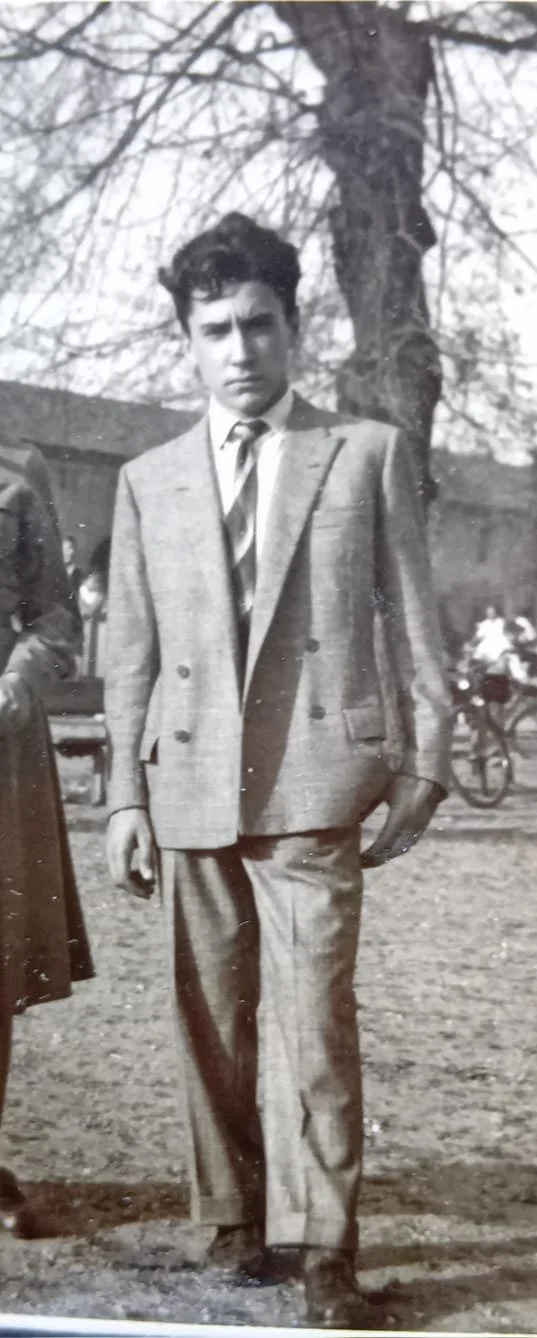
Ehi, Joe
Sei ancora in viaggio ?
Sei arrivato dove volevi andare ?
Stai ancora rincorrendo le onde di frequenza ? Ti stai ancora ascoltando il rumore di fondo della galassia ?
Ti aspettiamo quaggiù, per avere notizie da te, su cosa è e cosa non è.
Stai parlando con Dio , stai discorrendo con lui ? Ti arrabatti per avere ragione e per dimostrare qualcosa di sovra-divino ?
Secondo noi, hai preso al lazzo la cometa di Shoemaker-Levy e ti stai divertendo come un matto.
Secondo noi, non ti sta interessando nemmeno arrivare ora ai confini dell’infinito.
Ti piace stare ancora un pò a gironzolare come eri solito a fare qui, a guardare e osservare in giro. A incazzarti se qualcosa non quadra, a chiederti come mai e perchè mai.
Ti accompagna sempre il suono, quel ritmo tribale, quel quasar sonoro che faceva parte di te. Qui c’è Diego che sta impazzendo senza la tua batteria, per non parlare di Jimmy che pizzica nervosamente le corde. Io canto ma non so cosa canto. Ogni tanto mi viene una strofa e la butto giù.
Ci hai parlato tanto dell’archemondo che ora che ci sei finito dentro, non sai più come venirne fuori.
Stiamo pensando però che, in fondo, tu stai bene dove sei.
E allora, vecchio mio, brindiamo a te, ci accompagnerai in questo viaggio e i tuoi insegnamenti non rimaranno futili parole.
The Volcren
Ehi, Joe
Are you still traveling?
Did you get where you wanted to go?
Are you still chasing frequency waves? Are you still listening to the background noise of the galaxy?
We’re waiting for news from you down here, about what is and what isn’t.
Are you talking with God, are you discussing things with Him? Are you struggling to prove you’re right, to demonstrate something beyond the divine itself?
We think you’ve lassoed Shoemaker-Levy’s comet and you’re having the time of your life.
We think you’re not even interested in reaching the edges of infinity anymore.
You still enjoy wandering around a little longer, the way you used to here, looking and observing things. Getting pissed off when something doesn’t add up, wondering how and why the hell it could be that way.
Sound is still with you — that tribal rhythm, that sonic quasar that was part of who you were. Diego’s going crazy down here without your drums, and don’t even get me started on Jimmy nervously picking at the strings. I sing, but I don’t even know what I’m singing. Every now and then a verse comes to me and I throw it down.
You told us so much about the Archeworld that now that you ended up inside it, you don’t even know how to get back out.
But we’re thinking that, deep down, you’re okay where you are.
So, old man, here’s to you.
You’ll travel along with us on this journey, and your teachings won’t remain empty words.
The Volcren

VOLCREN
Tutto iniziò con un'idea. Chi siamo
Musica e AI: cosa significa davvero “creata da un essere umano”?
Ho letto con interesse l’articolo di Enzo Mazza su La Stampa (CLICCA SUL PULSANTE) e condivido pienamente un principio: chi ascolta deve sapere come è stata realizzata la musica che sta ascoltando.
Come frontman dei Volcren, una virtual band che utilizza dichiaratamente l’intelligenza artificiale, non ho quindi alcun problema con un’etichetta che segnali l’impiego di AI. Anzi: credo che la trasparenza sia necessaria.
C’è però un passaggio dell’articolo che apre una questione molto più complessa.
Secondo le nuove linee guida citate, una registrazione sviluppata con l’AI potrebbe entrare nelle classifiche soltanto quando il brano sia “sostanzialmente realizzato da un essere umano”.
Ma cosa significa esattamente sostanzialmente?
Se scrivo personalmente il testo, compongo e suono un riff di chitarra, stabilisco struttura, atmosfera e direzione musicale del brano, utilizzo quel materiale come origine della generazione, ascolto decine di risultati, li scarto, modifico il progetto, intervengo nuovamente e scelgo infine la versione che corrisponde alla mia idea, chi ha creato quella canzone?
La macchina ha avuto un ruolo enorme nella sua realizzazione sonora. Negarlo sarebbe assurdo.
Ma è altrettanto difficile sostenere che l’essere umano non abbia avuto un ruolo sostanziale nella sua creazione.
E allora dov’è il confine?
Nel numero di note suonate fisicamente?
Nella melodia?
Nel testo?
Nell’arrangiamento?
Nella performance vocale?
Nella registrazione finale?
E soprattutto: chi stabilisce quale percentuale di ciascuno di questi elementi sia necessaria perché una creazione possa ancora essere considerata sostanzialmente umana?
Questa distinzione è importante perché rischiamo altrimenti di mettere nello stesso contenitore realtà completamente diverse.
Da una parte esistono sistemi capaci di produrre automaticamente migliaia di tracce, che possono essere caricate sulle piattaforme persino con finalità speculative o fraudolente.
Dall’altra esistono autori che utilizzano l’intelligenza artificiale all’interno di un processo creativo umano: scrivono, compongono, suonano, scelgono, modificano, scartano e ricominciano.
Sono davvero la stessa cosa?
Per i Volcren la risposta è no.
Questo non significa pretendere lo stesso riconoscimento di chi compone, suona, canta e registra integralmente un brano senza strumenti generativi. Sarebbe poco credibile e, soprattutto, poco trasparente.
Significa però riconoscere che oggi “umano” e “AI” non sono più due categorie sufficienti a descrivere il processo creativo.
Tra una registrazione interamente eseguita da musicisti e novantamila tracce generate automaticamente esiste ormai un territorio enorme nel quale esseri umani e strumenti generativi partecipano in misura diversa alla creazione.
È proprio quel territorio che dobbiamo imparare a descrivere.
Per questo trovo molto più interessante distinguere fra AI Generated e AI Assisted, purché anche queste definizioni abbiano criteri chiari e verificabili.
Sono favorevole a dichiarare che i Volcren utilizzano l’intelligenza artificiale.
Ma accanto a quella dichiarazione vorrei poter dire anche un’altra cosa:
questo testo l’ho scritto io.
Questo riff l’ho composto e suonato io.
Questa storia viene dalla mia vita.
Queste decisioni artistiche le ho prese io.
L’AI mi ha aiutato a trasformarle in una registrazione.
Poi la canzone può piacere oppure fare schifo.
Fortunatamente, quello non lo decide né FIMI né un algoritmo.
Lo decide ancora chi ascolta.
Paul Littlestripes
Volcren
AI and Music: what does it really mean “created by a human?”
I read Enzo Mazza’s article in La Stampa with real interest (CLICK THE BUTTON), and there’s one thing I absolutely agree with: people deserve to know how the music they’re listening to was made.
I’m the frontman of Volcren, a virtual band that openly uses artificial intelligence. We’ve never tried to hide that, and we’re not about to start now. Put an AI label on our music if that helps people understand what they’re listening to.
Transparency is a good thing.
But there’s one line in the article that raises a much bigger question.
According to the new guidelines mentioned by Mazza, a recording developed with AI should only be eligible for the charts if the track is “substantially created by a human.”
Okay.
But what the hell does substantially actually mean?
If I write the lyrics myself, compose and play a guitar riff, decide the structure, mood and musical direction, use my own material as the starting point, go through dozens of generations, throw most of them away, change things, try again, tear the whole thing apart if it isn’t working, and finally choose the version that sounds like the song I had in my head — who created that song?
The machine played a huge role in turning that idea into an actual recording.
Pretending otherwise would be bullshit.
But saying the human being didn’t play a substantial role in creating it makes just as little sense.
So where exactly do we draw the line?
How many notes do I have to physically play?
Is it about the melody?
The lyrics?
The arrangement?
The voice?
The final recording?
And most importantly: who gets to decide how much of each of those things has to come from a human before a song qualifies as “substantially human”?
Because if we don’t answer that question, we’re going to end up throwing completely different things into the same bucket.
On one side, you have systems capable of pumping out thousands of tracks automatically and uploading them to streaming platforms, sometimes for no other reason than gaming the system or making money through fraudulent streams.
On the other, you have people using AI inside an actual human creative process.
They write.
They compose.
They play.
They choose.
They change things.
They reject things.
They start over.
Sometimes they spend hours working on something only to decide it sucks and throw the whole damn thing away.
Are we seriously saying these are the same thing?
For Volcren, they’re not.
And no, this doesn’t mean we should pretend we’re doing exactly the same thing as a musician who writes, plays, sings and records an entire song without generative tools.
We’re not.
Claiming otherwise wouldn’t be honest, and honesty is supposed to be the whole point of this conversation.
But the opposite claim doesn’t work either.
Today, “human” and “AI” are no longer enough as two neat little boxes to describe how music gets made.
Between a record performed entirely by human musicians and ninety thousand automatically generated tracks dumped onto streaming platforms every day, there’s a huge territory where humans and generative tools contribute in very different ways and to very different degrees.
That’s the territory we need to start talking about.
Which is why the distinction between AI Generated and AI Assisted makes a hell of a lot more sense to me — as long as those labels actually mean something and are based on clear, verifiable criteria.
I have no problem saying that Volcren uses artificial intelligence.
But if you put that label next to our name, then let me put a few other labels next to it too:
I wrote these lyrics.
I composed and played this riff.
This story came from my life.
I made these artistic choices.
AI helped me turn all of that into a recording.
That’s what happened.
No bullshit. No pretending the AI wasn’t there. And no pretending the human wasn’t there either.
After that, the song may be great.
Or it may suck.
Fortunately, neither FIMI nor an algorithm gets to decide that.
The listener still does.
Paul Littlestripes
Volcren